
Before this housesit, the only time I had been to Portugal was during a whirlwind layover at Lisbon airport. It was such a tease. The tourism industry knew exactly what they were doing by flooding the airport with gift shops full of Portuguese luxuries: shelves filled with port wine, fresh bottles of olive oil, and delicately painted ceramic tiles. Part of me wanted to forsake my next flight and escape into the Portuguese countryside. Compared to yet another transatlantic flight, who wouldn’t dream of that?
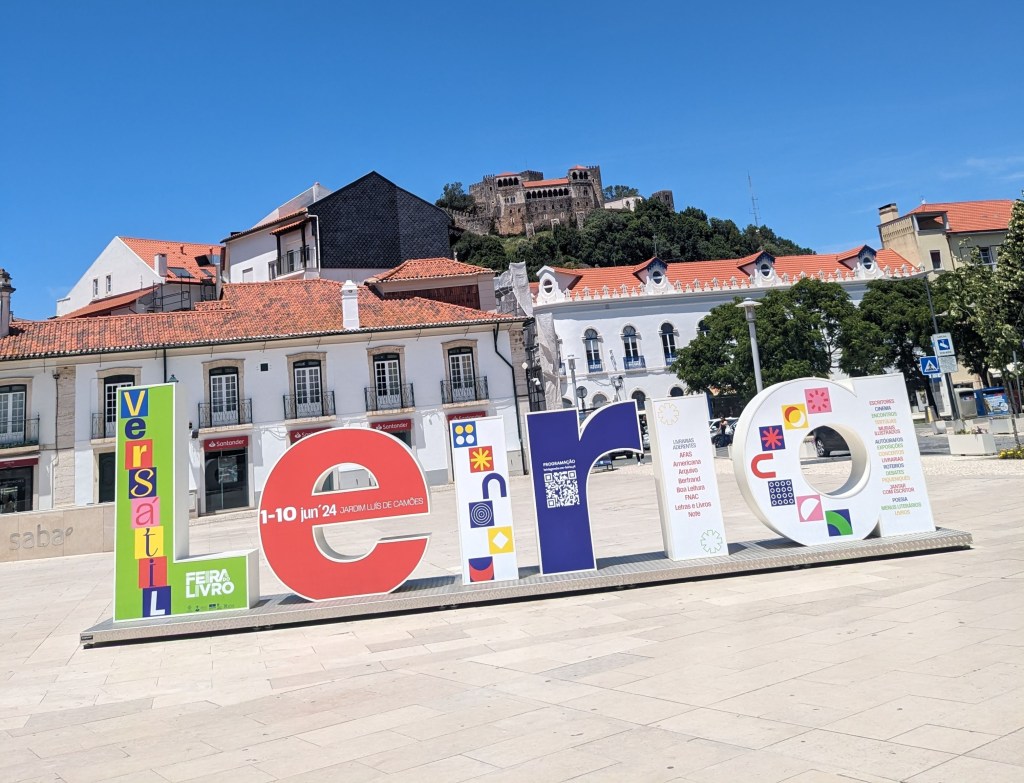
More rationally, I put Portugal on my list of countries to visit this year, and I was lucky enough to land a six-week housesit in the heart of the country. From May through June, I cared for two cats in a beautiful, sunlit apartment just outside Leiria’s city center.
I landed in Lisbon, back at the airport that had tempted me so much before. My recently acquired relaxed attitude toward travel meant that, despite booking a bus ticket in advance from Lisbon to Leiria (a two-hour ride), I figured I’d easily find the bus station at the airport when I arrived. Not so. The bus station isn’t at Lisbon airport; you have to take the metro to get there. My jet-lagged brain struggled to decide whether to navigate two different metro lines with two suitcases or just take an Uber. In retrospect, I should have opted for the Uber, but I was determined to be a “good traveler.” So, I dragged my bags up and down stairs, figured out the ticket machines, and caught the next metro train. It quickly became apparent that I would arrive at the bus station five minutes after my scheduled bus was supposed to leave. Luckily, buses to Leiria ran every hour and were very punctual, so I took the next one.

The bus ride to Leiria revealed a similar countryside to Southern France or Spain. Lush hillsides with a Mediterranean twist, occasional vineyards, white-washed and red-roofed houses. I’m surprised that there is not much of a train system to speak of – everyone I spoke to recommended buses to get around, not trains. Given the punctuality and popularity of the buses I saw at the bus station, I see why.
Leiria isn’t featured in on travel guides as a top destination in Portugal. The closest landmark is the Monastery of Batalha, about 15 minutes away. However, I’ve found that places like Leiria are much more relaxing, especially since I travel full-time. I’m tired of cramming countless tourist sites into a short time frame, and longer stays in less touristy areas have been a welcome relief.
Most of my time in Leiria was spent at my apartment and in the surrounding area. The apartment itself was beautiful, filled with the owner’s travel memories from India, Spain, and Southeast Asia. The two cats, Cupid and Shanti, were cuddly and spent hours napping while I worked. Just outside the apartment, a small path connected to Via Polis, a trail running along the River Lis, perfect for walking, running, or finding a sunny picnic spot. Picnicking and outdoor activities seem to be quite popular in Portugal, as the trails, parks, and squares were always full of families, children, cyclists, and joggers, especially on sunny days (which was almost every day).
CASTELO DE LEIRIA
Though Leiria isn’t a tourist hub, there are some worthwhile sites to visit. The town is mostly flat, but a lone hill in the center dominates the landscape. At its peak sits a stone castle straight out of a medieval fairy tale, complete with winding fortification walls and deep crenelations. There’s even an unmanned funicular to take visitors up the steep hill to the entrance, which I was grateful for under the late spring sun. Tickets to tour the castle were only €2.10, and I later found out that a combined ticket for multiple museums cost just €2.50. This seemed shockingly cheap, especially considering how well-maintained the castle was. Most of the signs around the castle also had English translations, which I appreciated.


Inside the tower keep, there was a temporary photography exhibit highlighting the human destruction of historical sites—a sobering reminder of how easily centuries-old artifacts can be lost to politics and misguided beliefs.
MUSEUM OF MOVING IMAGE

After leaving the castle, I took a short walk to the Museum of the Moving Image. Despite not being particularly interested in the medium, I decided to check it out, as the entry fee was low. However, I was less impressed with this museum’s scope. While there were many old cameras and zootropes on display, there were no English translations, so I had to guess at most of the exhibits.
Surprisingly, what captured my attention most was another temporary exhibit, combining amateur photography with poetry. Each framed photo was accompanied by a line or two of poetry, both in Portuguese and English. I found myself staring at some of the pieces for a long time, letting whatever complicated emotion conveyed wash over me and trying to understand it.
MUSEUM OF LEIRIA AND PAPER MILL
The local museum is small, though I was impressed by the scale of history it displayed. The start of the exhibit covered the very beginning of human existence in the region, going back tens of thousands of years. There were fascinating artifacts on display – rough stone tools made by our ancestors, the remains of a fire pit, and evidence of the loving burial of a young child. The remaining rooms were full of medieval paintings and religious paraphernalia, quite common in Europe and I’m sad to say, something I’m a bit immune to since that is generally what survives the generations.

A block down the River Lis is a historic paper mill, one of the first in the region. It’s free to visit, and the building is charming, with water wheels turning and old machinery made of wood and stone. Unfortunately, there were very few signs in Portuguese, and none in English, so I didn’t fully understand what I was seeing. Still, I admired the ingenuity of the past and left with a greater appreciation for how accessible paper is today.
MONASTERY OF BATALHA
Perhaps the day trip I most recommend in the region is the Monastery of Batalha. It’s not the easiest to get to from Leiria. Although there are buses, they are more regular on weekdays than weekends, so I ended up taking an Uber both ways.Given Portuguese prices it wasn’t too painful for the budget, especially since it is only a 15 minute drive from Leiria. Still, more expensive than the bus tickets for less than a euro each.
The monastery was built to commemorate King João I’s victory against the Castilians in 1385, a battle that secured Portugal’s independence and began a new royal dynasty. João vowed to build a grand site dedicated to the Virgin Mary if he won, and construction began soon after, lasting for 150 years. Though the monastery was abandoned in 1834, King Ferdinand II initiated a restoration project that continued into the 20th century. Today, it’s a UNESCO World Heritage site.
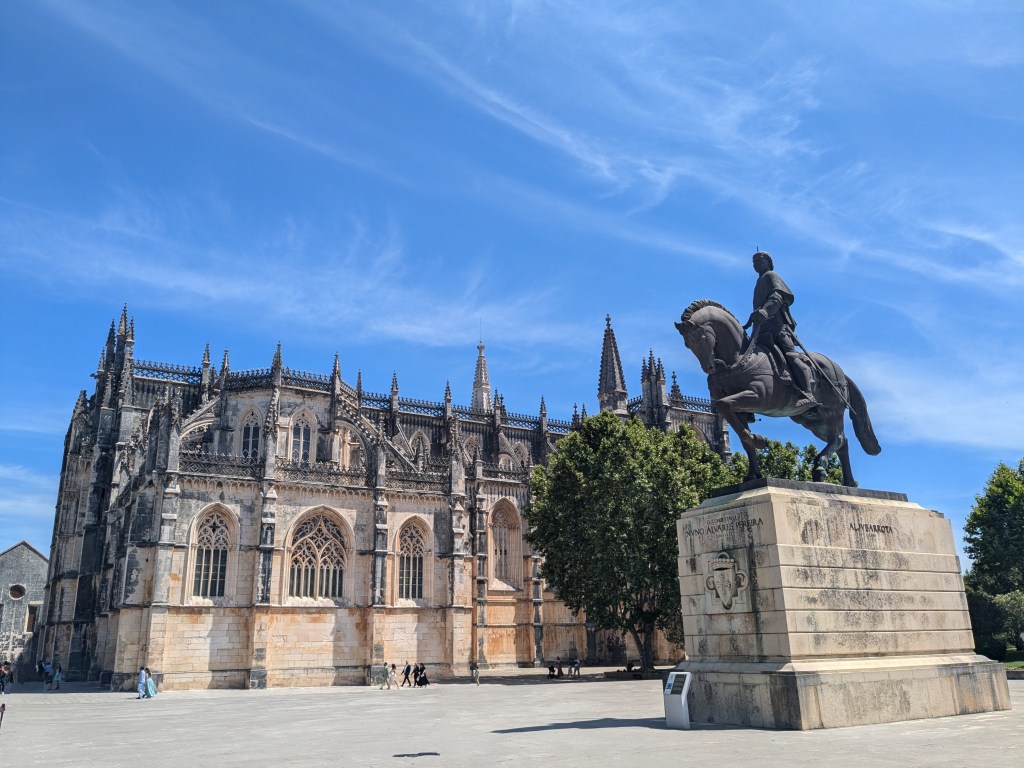

The monastery is nothing short of breathtaking. The building erupts out of a vast stone square and towers over crowds of visitors. The sandstone is defined by intricate carving and the dark stains of time. It is considered a masterpiece of Portuguese Gothic architecture, and it’s easy to see why it is a point of pride. It’s absolutely massive, and between the sanctuary, chapels, and cloisters, it’s one stunning view after another. Perhaps the most interesting part are the Unfinished Chapels, intended to hold the tombs of seven kings. The architect was called away to finish another monastery instead, and never got around to adding the roof. The construction is frozen in time, and you can see the work-in-progress even all these centuries later.

Outside of the monastery, there isn’t a lot to see in Batalha. That’s clearly the main attraction. That being said, I did walk up a quiet street to see the Boutaca Bridge, a 19th century viaduct in the neo-Gothic style. There was also a small museum which had neolithic artifacts, and even let visitors touch a dinosaur bone. I can’t say I’ve touched many bones in general, let alone a dinosaur bone. All in all, it was a nice day trip outside Leiria, and definitely shouldn’t be missed if you’re in that area of Portugal. Being a tourist destination, it was easy to get around on English and my paltry Portuguese phrases.
I’ve attempted to learn some Portuguese, but I’m embarrassingly bad at it. My French along with what little Italian and Spanish I know hasn’t helped one jot. Listening to the Portuguese around me, I find it to sound almost like Russian with a Romance language twist. Fortunately, even in this less-touristy town, most people speak English or French, and those that don’t are quite friendly anyways. (Happily, no interactions like that one man in Italy that yelled at me in French that I had no business being in Italy if I didn’t speak Italian. What a treat he was. Hey, I tried my best). Given how easy it was to get by in Leiria, I knew I wouldn’t have any issues exploring Porto and Lisbon, where I was heading next, to dive deeper into Portugal’s rich maritime history.


 Sans Peur
Leave a comment