
It’s difficult to think of Italy without thinking of Italian cuisine. In fact, it’s the highlight of most trips to the peninsula, and for good reason. That being said, the more time I spend in Italy, the more I realize that there really isn’t “Italian” cuisine. Instead, there is the cuisine of Tuscany, Emilia-Romagna, Piedmont, Sicily, Naples…and the fresh flavors of Liguria.
Liguria is a north-western region of Italy, with Genoa as its capital and many small towns and villages dotting its coastline. During my stay in Castiglione Chiavarese up in the hills north of the Cinque Terre, I often took the bus to and from Sestri Levante, and kept seeing signs for “L’agriturismo Il Castagneto”. An “agriturismo” is an Italian farm that caters to agrotourism, encouraging tourists to come and enjoy their produce or even stay a few nights, and I’d been curious about them for a long time. Initially looking just to eat there, I saw they offered cooking classes, so I enthusiastically signed up for a day of Ligurian cuisine.

L’agriturismo Il Castagneto is deep in the hills of Liguria – a world away from the tour buses, guide groups, and souvenir stands of the Cinque Terre. I walked there under the blistering Mediterranean sun, up a driveway framed with lush, wild growth that gradually evened out into neat rows of grapevines and olive orchards. The farmhouse was old but kept fresh with peach-colored paint, stone floors, and wooden window frames. The daughter Irene greeted me, holding off a rustic-looking young dog who wanted nothing more than to say hello to me and then go ‘play’ with the chickens. The rag-doll cat lounging in the sun eyed me with disinterest. Stepping into the cool shade of the kitchen, Irene’s mother Natalia provided a warm welcome, the picture of Italian motherhood and countryside. Where Irene spoke a little bit of English, Natalia spoke even less, and yet throughout the class we were able to communicate amazingly well over the shared love of cooking and food.

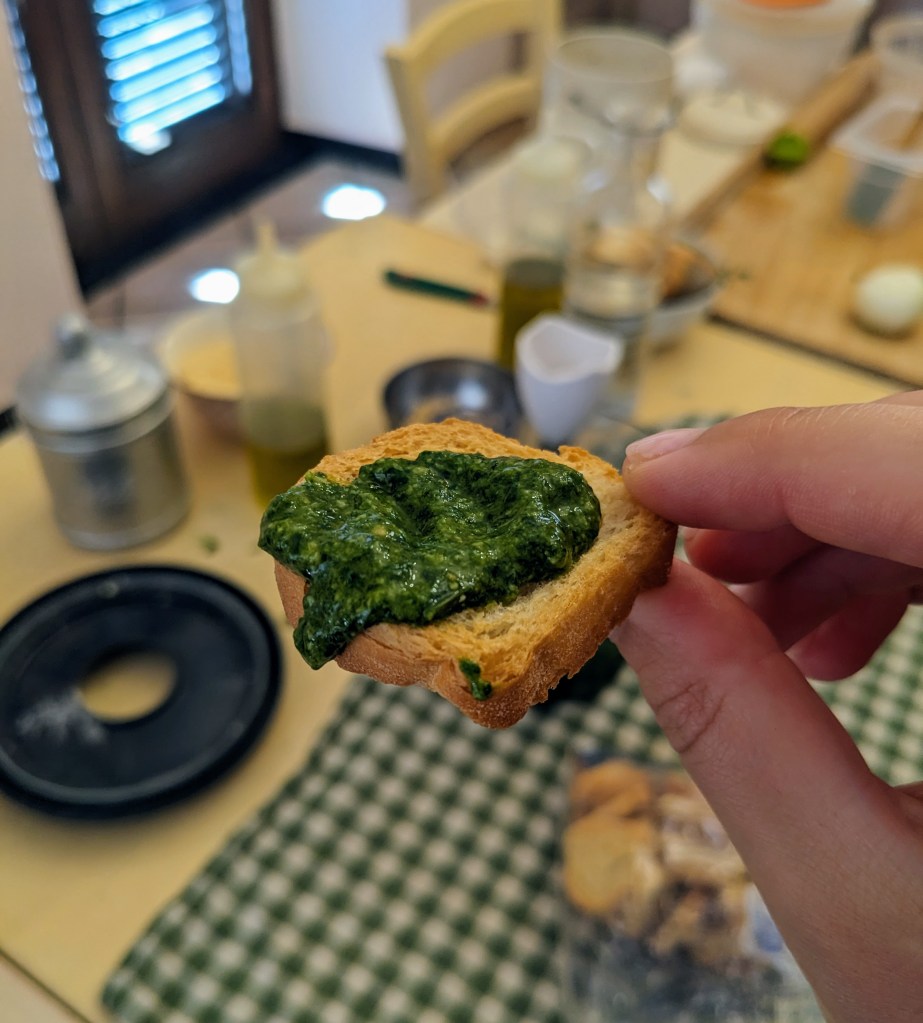
I was lucky enough to be the only student that morning, and they guided me through making four separate dishes. First came the onion tart, and they explained the base could be used with any vegetables on hand. When adding the cheese, Natalia was sure to specify that the local, ricotta-like product was “not Italian, but Ligurian!”, but admitted ricotta was an acceptable substitute. We crushed marjoram buds in our fingers to add to the onions, and the floral smell blended well with the basil we began picking off stems for the pesto. Of course, the region is perhaps best known for pesto, so naturally it was included in the class. We added Parmesan and pecorino cheeses, pine nuts, half a garlic clove, and the basil to the blender along with copious amounts of fresh, local olive oil and salt.
During the day we used a lot less garlic than you’d think. In Italian-American cooking, or perhaps even other regions in Italy, the refrain is often said that the more garlic the better, but Natalia was adamant that Americans usually put in far too much, and that we needed the dish to remain balanced. Indeed, I now fully agree with her, as that half clove of garlic was the perfect amount for the pesto and didn’t overpower the sweetness of the basil and sharpness of the cheese.

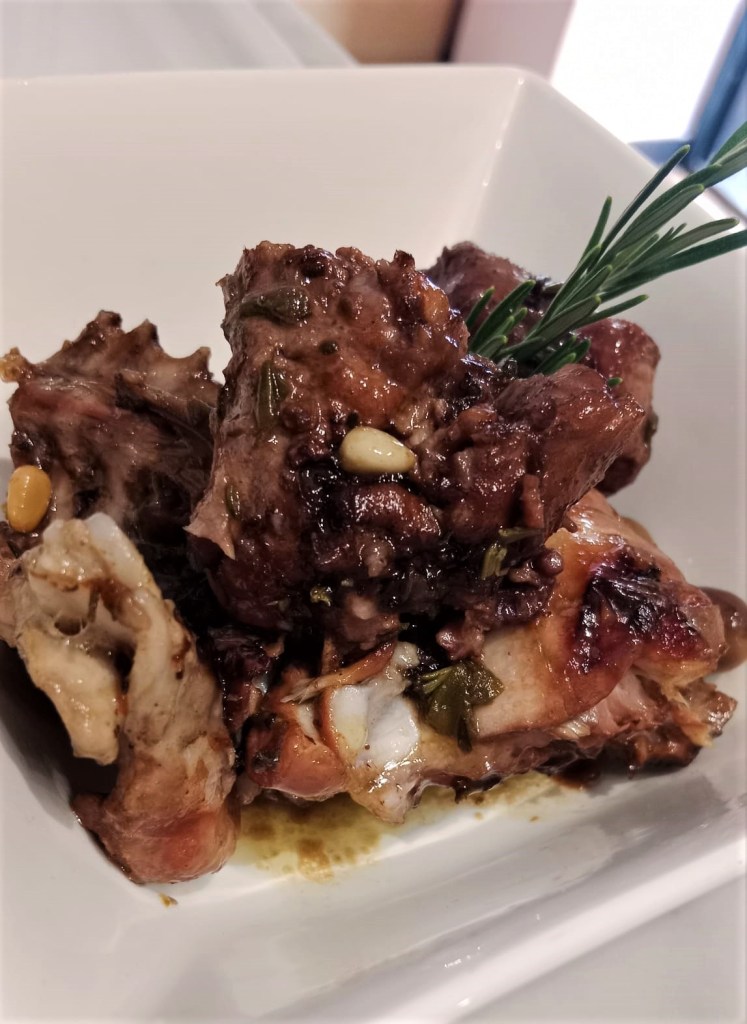
Next we cooked rabbit in the Ligurian-style, with plenty of onions, olives, pine nuts, and red wine. I have never even eaten rabbit before, let alone cooked it, but it is popular in Liguria as one of the few meats they partake in traditionally. This is not a land of cows and pigs, and the cuisine is generally lighter and more vegetable-based.
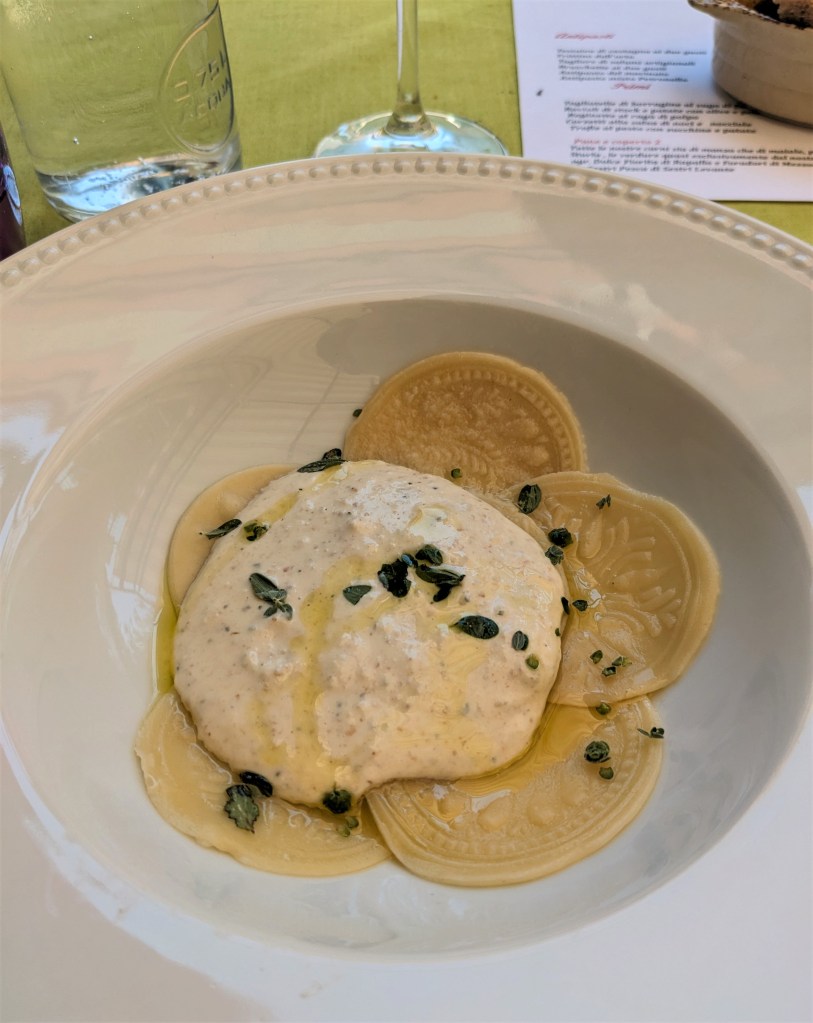
Our final dish was a walnut sauce that is typically eaten in the winter months, when fresh basil is certainly not in season and slightly heavier sauces make more sense. Having dubiously looked at the ingredients, I was delightfully surprised by the creamy, nutty flavor, and it ended up being my favorite dish of the day. I have included it in the two recipes below, although since my hosts measured everything by sight, taste, and feel, it was difficult to translate into words.

After cooking, I sat down on the terrace to eat the fruits of our labor as a few local families trickled in for lunch. The valley provided a slight breeze, and the singsong Italian blended in with the buzz of cicadas. As I sipped local white wine, lazy bumblebees were swallowed by vibrant flower petals on the wall next to me. My table had an uninterrupted view of the hills carpeted with hazy forests and capped by the ocean-blue sky. I then proceeded to eat far too much, but still managed to make room for an elder-flower gelato.
My only regret is not visiting more agriturismos while in Italy, and I can say without question that a trip to Italy is incomplete without at least one. The further you can get away from the well-trodden tourist paths, the better. There is an authenticity and purity that is impossible to mass reproduce. I look forward to my next visit, where I will learn to make foccacia!
*Yes, I’m aware I did what annoys us all and put the recipe at the bottom of the article, but to be fair, this is a personal travel blog and not a recipe blog, so think of these recipes just as an added bonus to a story.
https://www.agriturismocastagneto.it/

Basil Pesto
Ingredients:
- A bunch of fresh basil
- 1 garlic clove
- Spoonful of pine nuts
- ~ 2 tablespoons parmesan cheese
- ~ 2 tablespoons pecorino cheese
- Fresh olive oil
- Salt to taste
Note: You’ll see the ingredients aren’t very precise. A lot of it is to taste and what you think looks right. I recommend just having all the ingredients on hand and experimenting until it is to your preference.
Instructions: Wash and dry the basil. Make sure the basil is very dry, but do not crush it with towels which will bruise the leaves. Blend all of the ingredients except for the basil into a paste. This is because we do not want to over-blend the basil. Over-blending it will cause it to turn a dark color from the heat of the blender running too long. As an additional precaution, you can use a cold bowl to blend everything in. Add the basil a bunch at a time until everything is blended together and quite frankly, looks like pesto. Serve over pasta or bread, or enjoy by the spoonful.
Walnut Sauce
Ingredients:
- 200g peeled walnuts
- 1 garlic clove
- Marjoram
- Glass of fresh olive oil
- Three spoons ricotta cheese or “prescinseua”
- 3-4 slices of white bread (2-3 if using American size bread)
- Glass of milk
- Salt to taste
Note: You’ll see the ingredients aren’t very precise. A lot of it is to taste and what you think looks right. I recommend just having all the ingredients on hand and experimenting until it is to your preference.
Instructions: Put all the ingredients in a blender and blend at maximum speed. Taste and adjust the salt, adding a bit more milk or olive oil for the right consistency. Don’t let it be too liquid, because you will use pasta cooking water to finish it.
When you cook the pasta, (al dente, of course), the walnut sauce must be diluted with a few spoons of hot water from the cooking water. Add it to the pasta and mix well. Serve immediately.

 Sans Peur
This might be my favorite Sans Peur post ever! We watched Stanley Tucci’s Italy series and fell in love with Italian cooking that is NOT just tomato sauce. The onion tart is calling my name.
LikeLiked by 1 person
Yes that series is so amazing! I didn’t even make the connection!
LikeLike
One of our favorite recipes calls for a cup of pesto so we’ll have to try your recipe when we have a summer’s worth of basil to harvest!
LikeLiked by 1 person
Who can resist that title: “Recipes of Liguria?” You made my day!
♥Eleanore
http://www.avg.com/email-signature?utm_medium=email&utm_source=link&utm_campaign=sig-email&utm_content=webmail Virus-free.www.avg.com http://www.avg.com/email-signature?utm_medium=email&utm_source=link&utm_campaign=sig-email&utm_content=webmail <#DAB4FAD8-2DD7-40BB-A1B8-4E2AA1F9FDF2>
LikeLike
P.S. My Mom has a German version of onion cake that I love!
http://www.avg.com/email-signature?utm_medium=email&utm_source=link&utm_campaign=sig-email&utm_content=webmail Virus-free.www.avg.com http://www.avg.com/email-signature?utm_medium=email&utm_source=link&utm_campaign=sig-email&utm_content=webmail <#DAB4FAD8-2DD7-40BB-A1B8-4E2AA1F9FDF2>
LikeLike
Thanks for sharing
LikeLike
Knowing about different food culture makes me happy..thanks for the pist😇
LikeLike